
Table of Contents
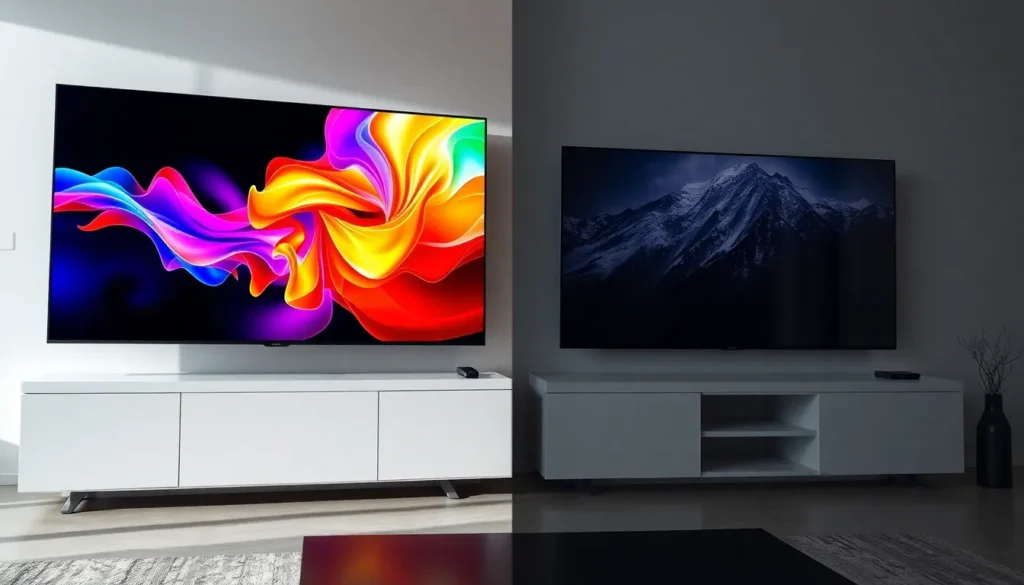
ToggleAs technology advances, the battle between QLED and OLED TVs heats up, leaving consumers wondering which is truly better. Each display technology offers unique advantages, making the choice more complex than ever. QLED, known for its vibrant colors and impressive brightness, appeals to those who enjoy a bright viewing experience. On the other hand, OLED captivates with its deep blacks and exceptional contrast, providing an immersive cinematic experience.
With various factors to consider, including picture quality, viewing environment, and budget, understanding the strengths and weaknesses of each technology is essential. This article dives into the key differences between QLED and OLED, helping viewers make an informed decision tailored to their needs. Whether it’s for gaming, movie nights, or everyday viewing, the right choice can elevate the home entertainment experience to new heights.
Overview of QLED and OLED
QLED and OLED represent two leading technologies in the television market, each with unique characteristics. Understanding these distinctions helps in making informed choices for home entertainment.
What Is QLED?
QLED, or Quantum Dot Light Emitting Diode, utilizes quantum dots to enhance color and brightness. QLED displays rely on a traditional LED backlight, which illuminates the screen. Key features include:
- Brightness: QLED TVs achieve higher brightness levels, making them ideal for well-lit rooms.
- Color Range: QLED technology supports a wider color spectrum, resulting in vibrant hues and saturated images.
- Lifespan: QLED panels typically have a longer lifespan compared to OLED options.
- Affordability: QLED TVs often present a more budget-friendly option, especially in larger sizes.
What Is OLED?
- Deep Blacks: OLED displays achieve true black levels, enhancing contrast and detail in dark scenes.
- Viewing Angles: OLED screens maintain color accuracy and brightness even at wide viewing angles.
- Thin Design: OLED panels allow for ultra-thin designs, adding aesthetic value to installations.
- Response Time: OLED panels have faster response times, reducing motion blur in action scenes.
Picture Quality Comparison
Picture quality plays a crucial role in distinguishing QLED and OLED technologies. Each displays unique strengths that cater to different viewing preferences and environments.
Contrast and Black Levels
OLED displays excel in contrast and black levels due to their self-emissive technology. Each pixel in an OLED panel generates its own light, allowing for true blacks and unparalleled contrast ratios. QLED technology, while impressive, relies on backlighting, which can lead to light bleed and lower black levels. Consequently, in dark scenes, OLED provides a distinct advantage, enhancing the depth and richness of images.
Color Accuracy and Brightness
Color accuracy is another defining feature of both technologies. OLED screens deliver superior color accuracy, especially when viewed from wide angles, maintaining vibrant and consistent colors without distortion. QLED TVs shine in brightness levels, utilizing quantum dots to produce vibrant colors that pop, particularly in well-lit environments. Although QLED achieves impressive brightness, it may not replicate the same level of contrast and depth in color that OLED offers, particularly in darker scenes.
Performance in Different Environments
Performance varies significantly between QLED and OLED technologies in different viewing environments. Understanding how each performs in specific conditions aids in making the right choice based on individual needs.
Viewing Angles
OLED displays excel at wide viewing angles, maintaining color accuracy and brightness even when viewed from the side. Their self-emissive technology allows each pixel to emit its own light, resulting in consistent picture quality regardless of the viewer’s position. In contrast, QLED TVs experience color and brightness degradation at wider angles due to their reliance on backlighting. This limitation can lead to washed-out images when viewed off-axis, making OLED the preferred option for group viewing settings.
Ambient Light Performance
QLED TVs perform exceptionally well in bright environments, often outshining OLED in instances of high ambient light. Their higher peak brightness levels and enhanced color volume allow for vibrant images even in sunlit rooms. QLED’s quantum dot technology enhances this performance, reflecting light effectively without compromising image quality. Conversely, OLED displays may struggle in direct sunlight, as their contrast levels can diminish in well-lit conditions, potentially leading to a less immersive viewing experience. For dark rooms, OLED shines, providing deep blacks and superior contrast, while QLED maintains an advantage in brighter settings, ensuring optimal visual impact.
Longevity and Burn-In Issues
Longevity and burn-in issues significantly influence the choice between QLED and OLED technologies. Understanding these factors helps users make informed decisions regarding display durability and performance over time.
Lifespan of QLED vs. OLED
QLED displays generally have a lifespan of over 100,000 hours, making them a long-lasting option. This durability arises from their reliance on inorganic materials, which resist degradation from prolonged use. In contrast, OLED displays typically last around 30,000 to 40,000 hours before showing signs of deterioration. The organic compounds used in OLED are more susceptible to wear over time. Consequently, QLED proves to be a better choice for users prioritizing longevity in high-use scenarios.
Burn-In Concerns with OLED
Burn-in represents a significant concern for OLED technology. This phenomenon occurs when static images remain on-screen for extended periods, causing permanent ghosting effects. Factors such as high brightness settings and the display of static content—like channel logos or video game HUDs—exacerbate the risk. Manufacturers implement various mitigation techniques, such as pixel shifting and screen savers, to minimize burn-in. Despite these measures, users who plan to watch content with static elements frequently may find QLED to be a safer option, as it eliminates burn-in issues due to its backlit technology.
Pricing and Value
Pricing significantly influences the decision between QLED and OLED technologies. Both options offer a range of prices, impacted by features, sizes, and brand reputation.
Price Range of QLED and OLED
QLED TVs typically range from $500 to $3,000 based on size and specifications. Smaller models start at around $500, while premium options can exceed $3,000 for large, high-end units with advanced features. In contrast, OLED TV prices range from $1,000 to $4,000, primarily due to the higher manufacturing costs associated with OLED technology. Basic OLED models often deflect toward the lower end of the spectrum, while larger, feature-rich models can approach or exceed the $4,000 mark.
| Technology | Price Range |
|---|---|
| QLED | $500 – $3,000 |
| OLED | $1,000 – $4,000 |
Which Offers Better Value?
Value assessment weighs performance against cost. QLED TVs deliver exceptional brightness and longevity at lower price points, making them ideal for bright environments and budget-conscious consumers. Their affordability allows buyers to secure larger sizes without a significant investment.
OLED TVs, while pricier, offer unparalleled picture quality, especially in dark settings. Those prioritizing cinematic experience and deep blacks might find the investment worthwhile despite the higher cost. When considering longevity, QLED’s extended lifespan can enhance its value over time, particularly for users focusing on durability and lower maintenance issues. Ultimately, personal preferences, viewing habits, and budget dictate the better value between QLED and OLED options.
Choosing between QLED and OLED ultimately comes down to individual preferences and viewing conditions. For those who prioritize vibrant colors and brightness in well-lit spaces QLED is an excellent choice. Its longevity and affordability make it appealing for budget-conscious consumers.
On the other hand OLED offers a superior cinematic experience with its deep blacks and exceptional contrast. It’s ideal for viewers who enjoy watching movies in darker environments. Each technology has its strengths and weaknesses so understanding personal needs is essential. By weighing factors such as picture quality longevity and budget consumers can confidently select the best option for their home entertainment setup.