
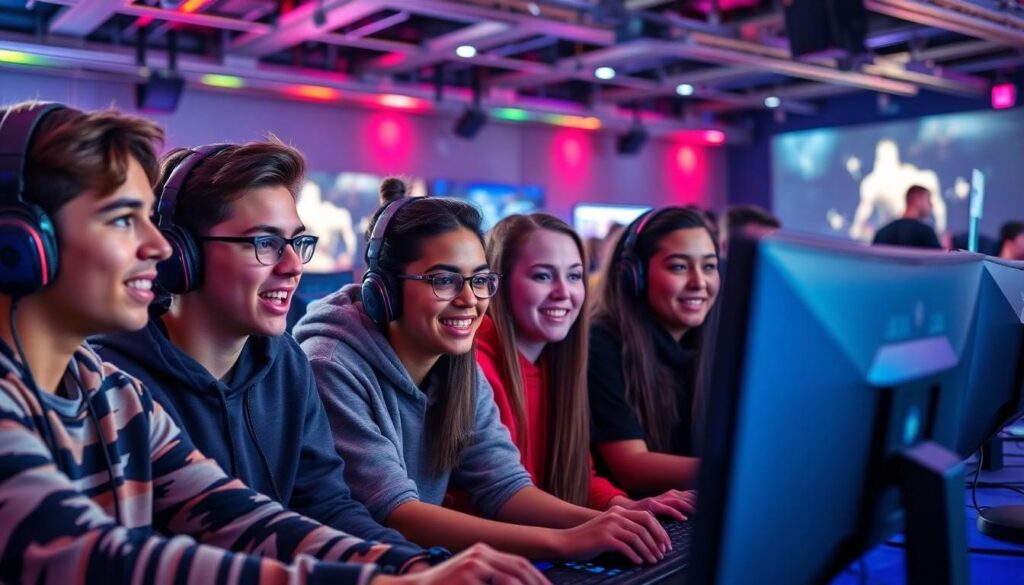
Esports isn’t just a bunch of folks glued to their screens; it’s a booming industry that’s reshaping how we view competition and entertainment. Imagine a world where teamwork, strategy, and lightning-fast reflexes come together in a digital arena—sounds like a sci-fi movie, right? But it’s happening right now, and the benefits are as exciting as a last-minute game-winning goal.
Overview of Esports
Esports has emerged as a powerful global phenomenon, reshaping the landscape of competitive entertainment. This industry boasts diverse titles that attract millions of participants and viewers alike. Popular games such as League of Legends, Dota 2, and Counter-Strike: Global Offensive illustrate the strategic depth and engagement that define esports.
Teamwork plays a crucial role in esports. Players collaborate to execute complex strategies, showcasing their ability to communicate effectively under pressure. Those who participate often develop valuable skills, such as leadership and problem-solving. High-stakes tournaments reward players and create a spectator experience comparable to traditional sports.
Spectatorship has skyrocketed in esports. Platforms like Twitch and YouTube Gaming provide accessible viewing experiences, allowing fans to engage with content creators in real time. Statistics indicate that esports viewership surpassed 460 million globally in 2021, reflecting its growing appeal.
Sponsorship and advertising within esports contribute to its commercial viability. Major brands invest heavily in tournaments, recognizing the potential to reach younger demographics. Research shows that esports sponsorship spending reached $1.1 billion in 2021, further solidifying its market presence.
Diversity characterizes esports, as both participants and audiences span various age groups and backgrounds. This inclusivity fosters a sense of community among fans and players. Events held around the world emphasize the international nature of esports, attracting participants from numerous countries.
Career opportunities within esports continue to expand. Roles range from professional players to team coaches and event organizers. For many, it offers a pathway to pursue their passion while contributing to a billion-dollar industry.
Mental Benefits of Esports

Engaging in esports offers numerous mental advantages for participants. Cognitive development and enhanced problem-solving skills top the list.
Improved Cognitive Skills
Players experience significant improvements in cognitive skills through regular gameplay. Fast-paced games demand sharp focus, strategic thinking, and effective multitasking. Reaction times improve as players learn to process information quickly and make rapid decisions. Studies indicate that engaging in esports can elevate skills like spatial awareness and memory retention. The competitive environment fosters adaptability, allowing players to respond effectively to unexpected challenges. Over time, these cognitive enhancements contribute to better performance in both gaming and real-world scenarios.
Enhanced Problem-Solving Abilities
Esports cultivates advanced problem-solving abilities in participants. Players often face complex situations where strategic planning is crucial. Games require devising and executing strategies collaboratively, reinforcing teamwork. Decision-making skills improve as players analyze various tactics and adapt to changing dynamics. This constant evaluation promotes analytical thinking and creative solutions under pressure. Research shows these skills extend beyond gaming, influencing academic and professional success. As a result, esports serves as a valuable tool for enhancing the ability to tackle real-life challenges confidently.
Social Benefits of Esports
Esports offers significant social benefits, creating opportunities for players to develop essential interpersonal skills.
Building Teamwork and Collaboration
Team-based games like League of Legends and Dota 2 emphasize teamwork. Players must communicate effectively and coordinate strategies to succeed. Collaboration fosters strong relationships among teammates, enhancing mutual support. Engaging in these environments reveals the importance of working together, showcasing how varied roles within a team contribute to collective success. Moreover, players learn to trust one another, which is crucial for achieving goals. Experiences in esports translate into better teamwork skills in academic and professional settings, as many participants successfully cultivate their ability to collaborate in diverse life situations.
Expanding Social Networks
Esports connects individuals from different backgrounds, expanding social networks. Notably, online platforms like Twitch and Discord allow players to interact globally. Participants in tournaments often form lasting friendships, sharing a passion for gaming that transcends geographic boundaries. Creating communities around favorite games fosters social interaction and inclusion. Events such as esports competitions bring fans together, further strengthening these connections. Players often find new opportunities for collaboration, leading to personal and professional relationships that last beyond the game. Engaging with esports communities develops not only a sense of belonging but also valuable social skills that are beneficial in various aspects of life.
Physical Benefits of Esports
Esports offers various physical benefits that players may not initially realize. Engaging in competitive gaming can enhance physical abilities.
Hand-Eye Coordination
Players develop strong hand-eye coordination through constant gameplay. Quick movements and precise actions require synchronizing visual input with physical responses. Gamers often improve their dexterity, which translates into better fine motor skills. For instance, studies show players outperform non-gamers in tasks requiring rapid accuracy. These enhanced abilities can also benefit activities outside gaming, such as sports or other hobbies that necessitate similar coordination skills.
Reaction Time Improvement
Improving reaction times is a key physical advantage of esports. Fast-paced games demand swift decisions, requiring immediate responses to on-screen events. Research indicates that regular players can react 20 to 30 percent faster than non-players. Such enhancements can influence reactions in real-life situations, promoting agility and quick thinking. For competitive scenarios, sharper reflexes provide a distinct edge, especially in high-pressure environments where timing can determine success.
Career Opportunities in Esports
Esports provides a variety of career pathways, reflecting its booming industry status. Professional players compete in tournaments, aiming for prize money and sponsorships. Coaches guide these players, developing strategies and improving techniques to enhance team performance. Event organizers manage the logistics of tournaments, ensuring engaging experiences for participants and spectators.
Moreover, commentators and analysts add depth to broadcasts, offering insights and play-by-play narrations during events. Content creators produce videos and streams on platforms like Twitch and YouTube, building large audiences that attract brand sponsorships. Marketing and public relations specialists promote esports entities, creating campaigns that resonate with fans and increase visibility.
Job roles in esports also span into business development and management. Many companies seek individuals to drive growth through strategic partnerships and revenue generation. Additionally, tournament organizers focus on planning, executing, and promoting competitive events, requiring strong project management skills.
The industry demonstrates substantial growth, with revenues estimated at $1.1 billion in 2021, driven by sponsorships and media rights. As esports continues to expand, job opportunities are expected to increase across various sectors. Diverse backgrounds benefit from these openings, enhancing community inclusivity. Individuals pursuing careers in esports can expect to enter a vibrant, dynamic field full of potential.
Conclusion
Esports is more than just a trend; it’s a transformative force in entertainment and competition. The blend of strategy teamwork and cognitive development makes it appealing to a wide audience. As players hone their skills they also foster social connections that enrich their lives.
The industry’s growth is evident in its expanding career opportunities and substantial investments making it a viable path for many. With its ongoing evolution esports is set to redefine how people engage with gaming and each other. The future looks bright for this dynamic landscape where passion meets profession.